


Rosacea is a skin condition that can cause both confusion and frustration. Many people experience this condition in different ways, which can make the skin disorder difficult to recognize and treat effectively. In this blog post, we’ll briefly address some of the most pressing questions about rosacea, so you can feel better informed as you look for answers.
Rosacea - what is it?
Rosacea is a chronic, recurring skin condition that primarily affects the face. It often starts with redness on the cheeks, nose, and forehead, and can develop into visible blood vessels, swelling, and acne-like breakouts.
Which sunscreen is best for rosacea?
Choosing sunscreen is essential for people with rosacea. Look for products with physical blockers such as zinc oxide and titanium dioxide, which are less irritating than chemical sunscreens. A fragrance-free, non-comedogenic sunscreen with an SPF of 30 or higher is preferable.
Rosacea - how long does it last?
The duration of rosacea can vary considerably from person to person. Some people experience flare-ups followed by periods of remission, while for others it can be more persistent, without clear periods of remission.
Which products should I use for rosacea?
If you have rosacea, it’s essential to keep your skincare routine to a minimum. The first important step is to avoid over-treating your skin.
So adopt a 'less is more' approach to your skincare routine! If you’ve previously used a wide range of skincare products such as creams, toners, essences, serums, masks, peels, brushes, and scrubs, consider simplifying your routine. Focus on the most basic and essential products to avoid unnecessary skin irritation.
A consistent and effective skincare routine for rosacea can easily consist of just four to five products. For example: a good, gentle cleanser, a good moisturizer, a hydrating serum (optional), a treatment product (often a night cream), and, of course, sun protection. Very simple, very effective.
What causes rosacea?
The causes of rosacea are not fully understood, but factors such as genetics, environment, lifestyle, and even certain types of skin mites (Demodex) have been linked to the condition.
Is rosacea hereditary?
Yes, rosacea can be hereditary. If you have family members with rosacea, you're at greater risk of developing the condition too.
Is rosacea an autoimmune disease?
The debate about rosacea as an autoimmune disease is ongoing. While some researchers believe that elements of an autoimmune response are involved, rosacea is generally not classified as a traditional autoimmune disease.
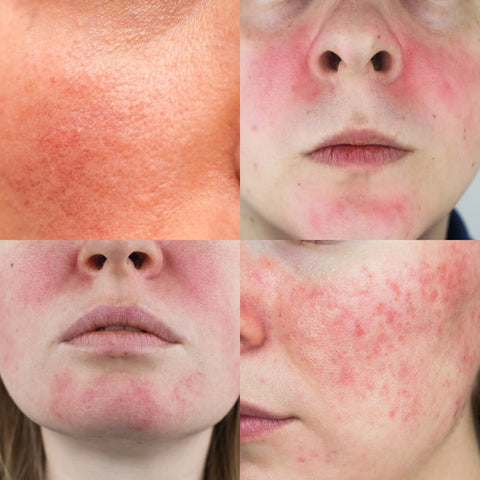
What does rosacea look like?
Rosacea can appear as facial redness, small visible blood vessels, small red pustules, and often a burning or tingling sensation in the skin. It can also cause red, watery eyes. Below are some examples of typical appearances.
Conclusion
Living with rosacea can be challenging and frustrating. However, effective information and treatment can help manage the symptoms and keep the condition under control. Although rosacea is classified as a chronic condition, it can be treated to the point where it hardly affects everyday life. So, whatever stage of the condition you're at, whether you're experiencing an acute flare-up or are new to this challenging situation, it's important to remember that this is not a permanent condition.


0 comments